Close
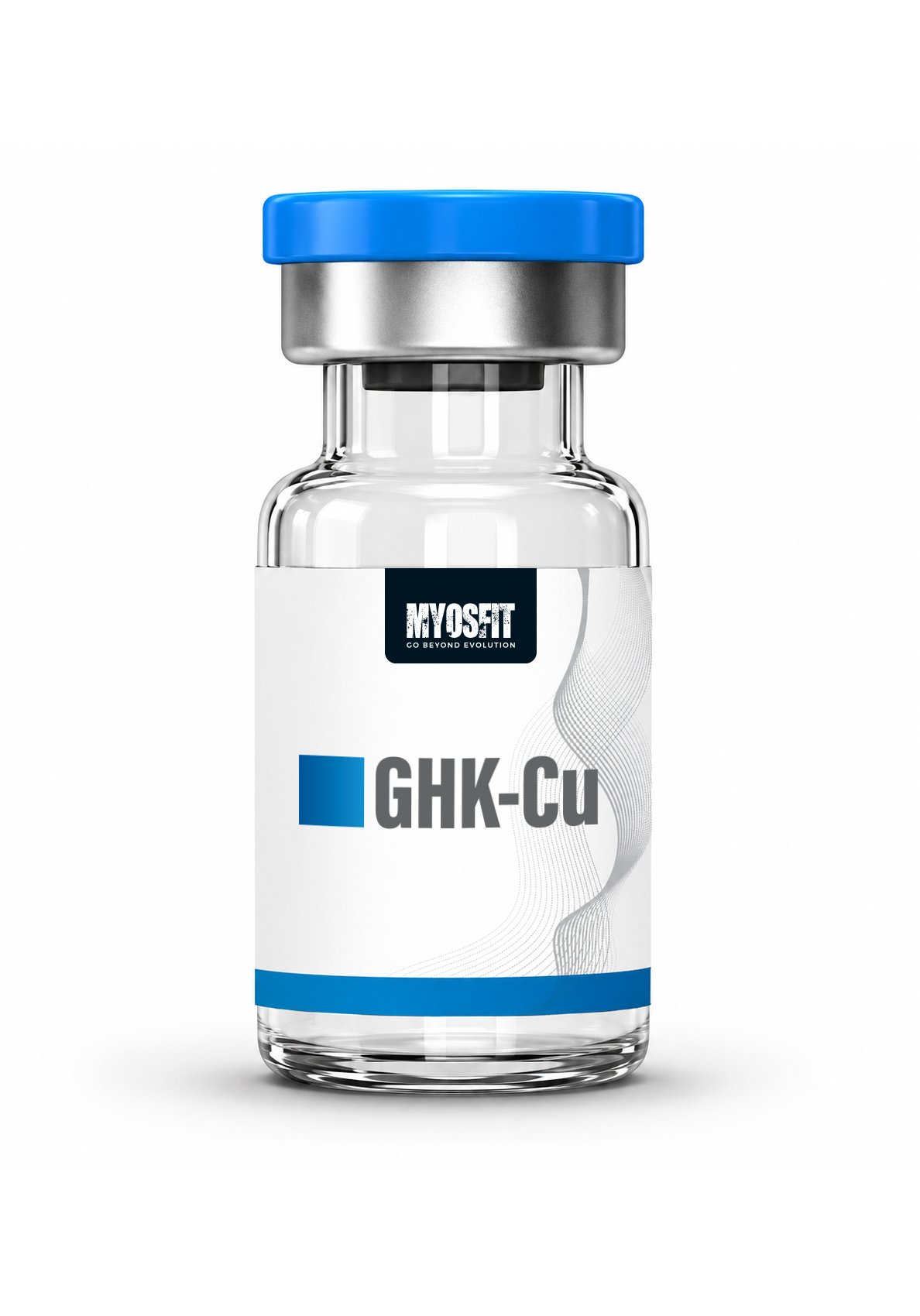
GHK-Cu is a copper-binding research peptide commonly studied in laboratory settings for its relationship with tissue remodeling, extracellular matrix signaling, wound-healing models, collagen-related research, and cellular repair pathways

$75.50
AVAILABILITY: IN STOCK
This product is intended for laboratory research purposes only. It is not intended for human or veterinary use, diagnosis, prevention, or treatment of any disease.
GHK-Cu, also known as copper tripeptide-1, is a copper-binding peptide complex studied in laboratory research for its relationship with tissue-remodeling pathways, extracellular matrix activity, collagen-related signaling, inflammatory-response models, and cellular repair mechanisms. Research involving GHK-Cu often focuses on how the GHK peptide interacts with copper ions and how this complex may influence cellular communication under controlled laboratory conditions
All products are manufactured in ISO-certified facilities and meet strict quality standards.
Product Name: GHK-Cu Research Peptide
Size: 100 mg
Format: Lyophilized powder
Category: Tissue Remodeling / Cellular Repair Research
Intended Use: For Laboratory Research Only
Testing: Third-Party Tested
Storage: Store lyophilized material in a cool, dry place. Refrigerated storage is commonly used for long-term stability. Protect from heat and direct light.
Studied in laboratory models involving extracellular matrix activity, collagen-related pathways, and tissue-response signaling.
Referenced in research involving copper-binding activity, peptide-metal complexes, and cellular communication pathways.
Studied in relation to wound-healing models, inflammatory-response pathways, and controlled tissue-repair research.
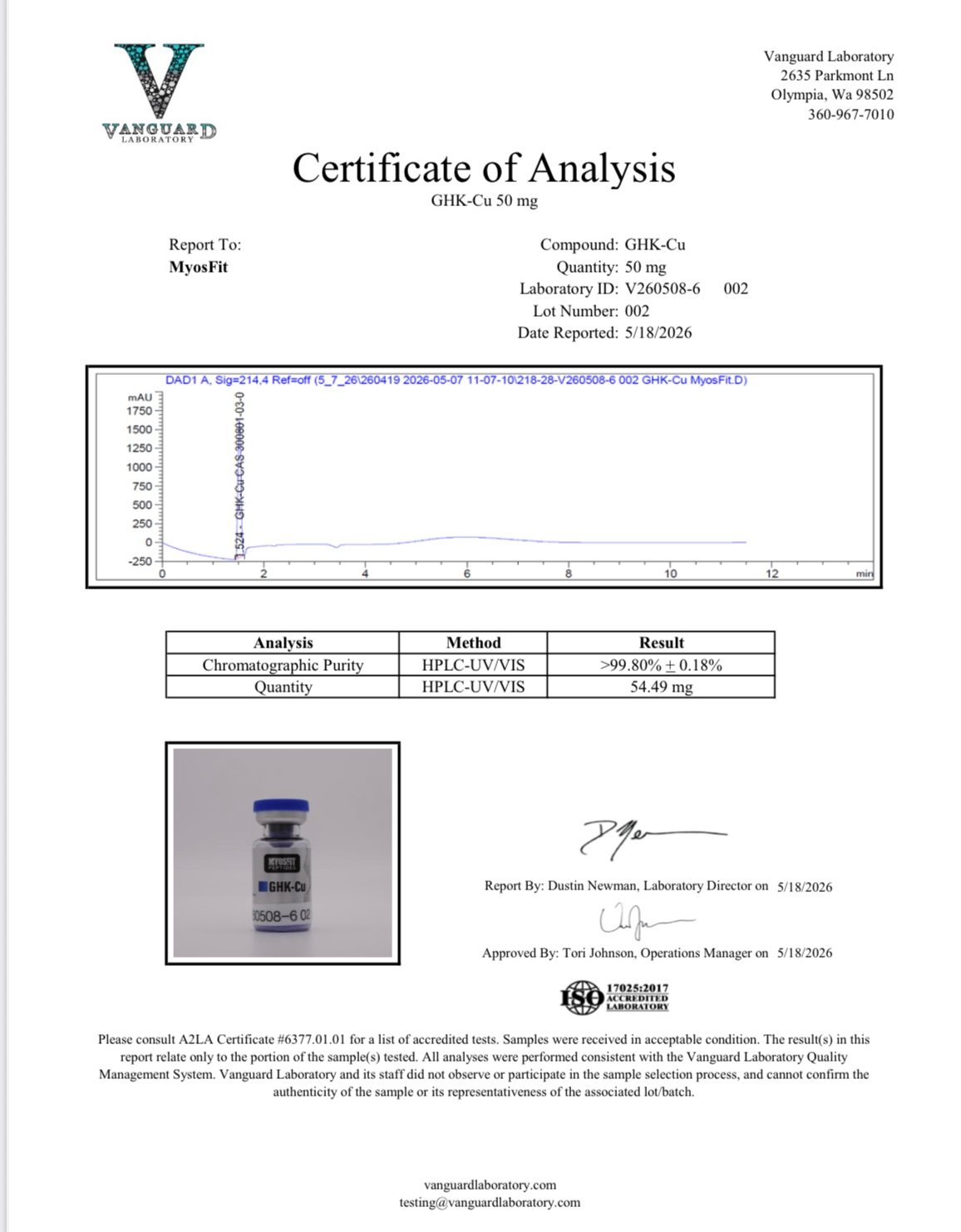
Access the Certificate of Analysis for this product.
Sequence: Gly-His-Lys
Molecular Formula: C₂₈H₄₈CuN₁₂O₈
Molecular Weight: 744.3 g/mol
Appearance: Blue to blue-green lyophilized powder
Purity: Refer to batch-specific COA
Solubility: For laboratory handling only; refer to product documentation or batch-specific COA
Source: Synthetic peptide-copper complex
This product is intended exclusively for laboratory research purposes. It is not intended for human or veterinary use, safety, or diagnostics.
1. What is GHK-Cu peptide?
GHK-Cu, also known as copper tripeptide-1, is a copper-binding research peptide studied for its relationship with tissue-remodeling pathways, extracellular matrix signaling, collagen-related research, and cellular repair models.
2. What is GHK-Cu studied for?
GHK-Cu is commonly studied in laboratory models involving extracellular matrix activity, collagen-related pathways, copper peptide signaling, inflammatory-response models, tissue-repair research, and cellular communication.
3. What have researchers found in GHK-Cu studies?
Research has evaluated GHK-Cu in areas involving tissue remodeling, collagen and elastin-related pathways, glycosaminoglycan activity, wound-healing models, gene-expression modulation, and inflammatory-response signaling. These findings are based on controlled research settings and should not be presented as treatment claims or human-use recommendations.
4. Why is GHK-Cu called a copper peptide?
GHK-Cu is called a copper peptide because the GHK tripeptide can bind copper ions. This copper-binding relationship is one reason it is frequently studied in peptide-metal complex research and tissue-response models.
Learn the basic research context, structure, and laboratory relevance of peptides in scientific studies.
Explore GHK-Cu research areas, copper peptide signaling, tissue remodeling, extracellular matrix activity, and laboratory study context..